Masonry & Construction Skills Training Initiative in Keonjhar
Bridging Livelihood Gaps Through Practical, Market-Linked Skill Development
In the mining- and agriculture-linked economy of Keonjhar district, Odisha, rural livelihoods are largely shaped by informal labour, seasonal income, and limited access to structured skill-building opportunities. While construction work remains a key source of employment, it is often unorganised, low-paying, and lacks pathways for long-term livelihood stability.
For working-age individuals (18-50 years), especially women and economically disadvantaged households, the gap between available labour and dignified skilled employment remains significant.
The Masonry & Construction Skills Training Initiative was designed to address this gap by enabling rural communities to transition from unskilled labour to certified skilled workers through structured, hands-on training.
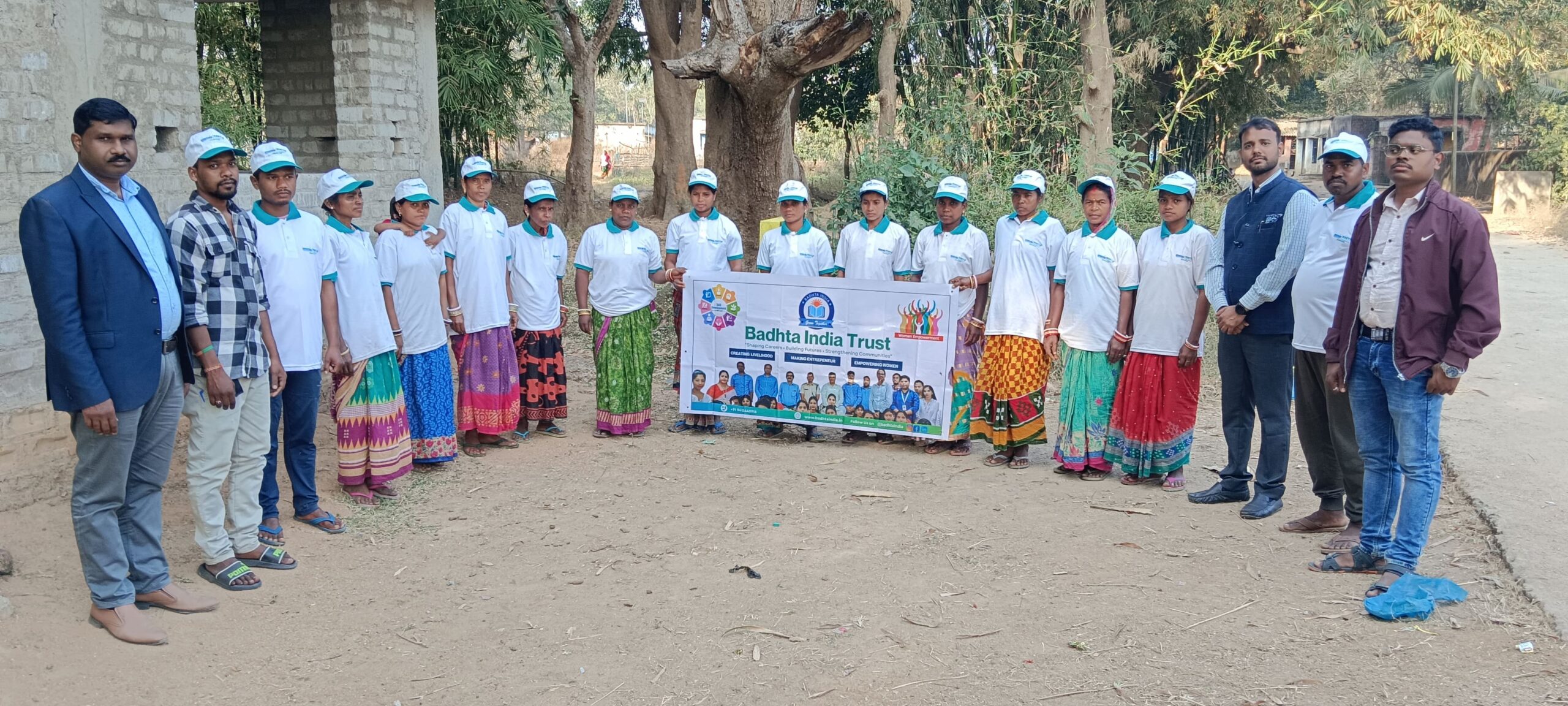
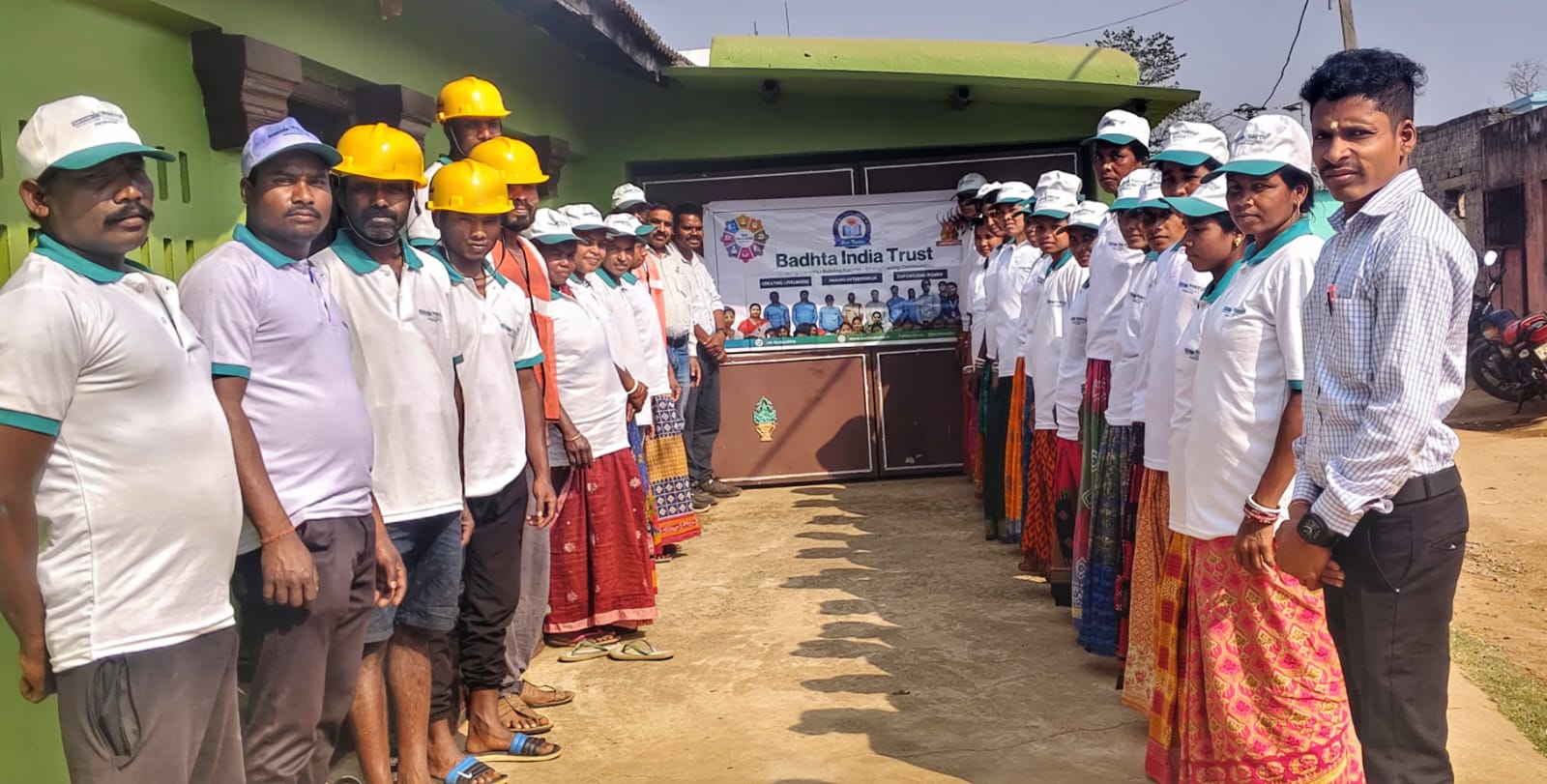
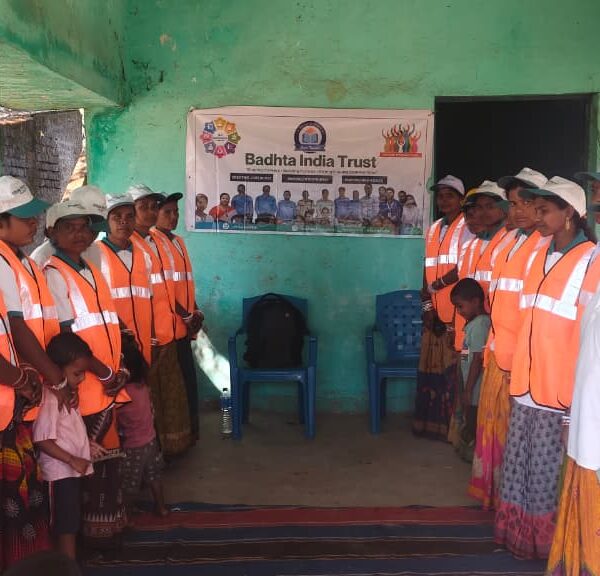
Implemented between December 2025 and March 2026 in Keonjhar district, Odisha, the programme was delivered by the Rural Self Employment Training Institute (RSETI), sponsored by Bank of India, with Badhta India Trust leading last-mile mobilisation and implementation across four panchayats: Sandaposi, Naigaon, Tolokbahal, and Balibandha.
A Last-Mile Skill Intervention with Strong Community Reach
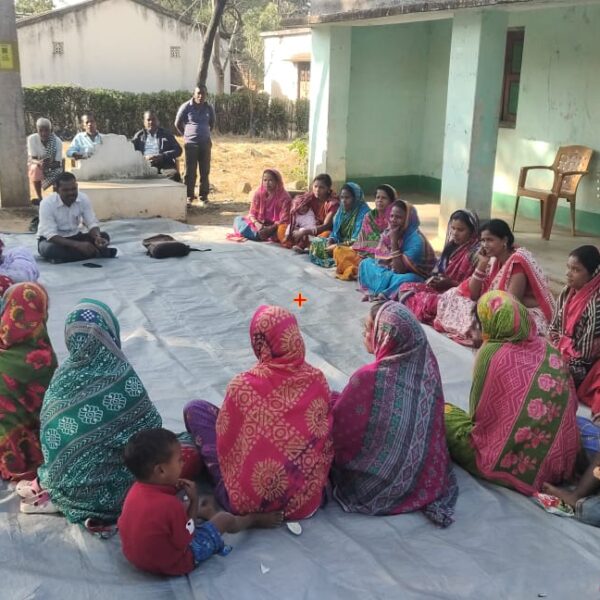
The initiative adopted a community-driven mobilisation model to ensure participation from underserved households across remote villages. Special emphasis was placed on inclusion of women and first-time learners, many of whom had never accessed structured vocational training before.
Over four residential batches, the programme trained:
- 140 participants (18-50 years age group)
- Across 4 panchayats
- Through 30-day intensive residential training cycles
- With ~76% women participation, marking a significant shift in a male-dominated sector
This high participation reflects both latent demand for skill development and growing community acceptance of women in construction-related work.
Building Skills Through Practice, Not Just Instruction
The training model was designed around a simple principle: learning by doing.
Instead of classroom-based instruction, participants engaged in:
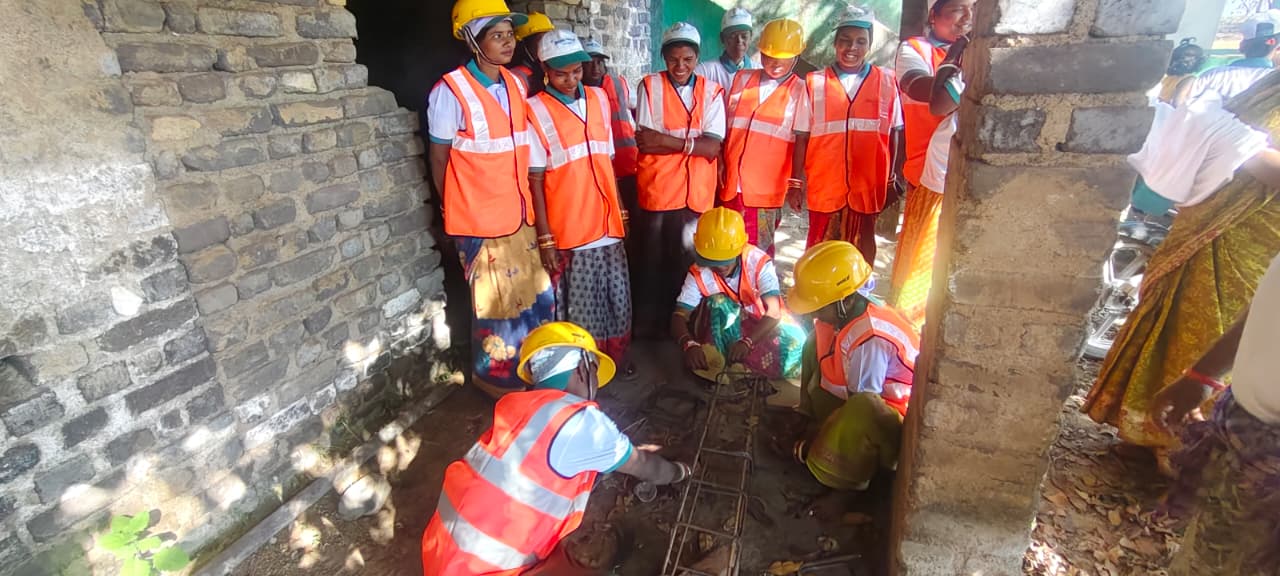
- Hands-on masonry and concrete work
- Real-site construction exposure
- Demonstration-based learning by trainers
- Continuous practice and feedback cycles
This experiential model proved especially effective for first-generation learners and individuals with limited formal education, enabling them to build confidence alongside technical skills.
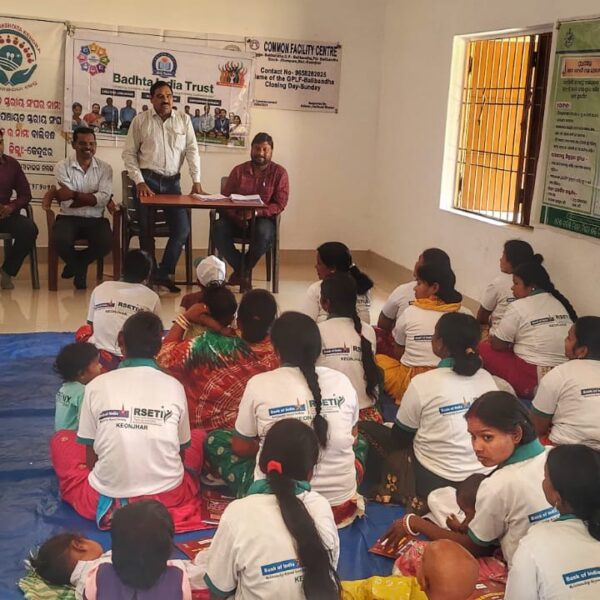
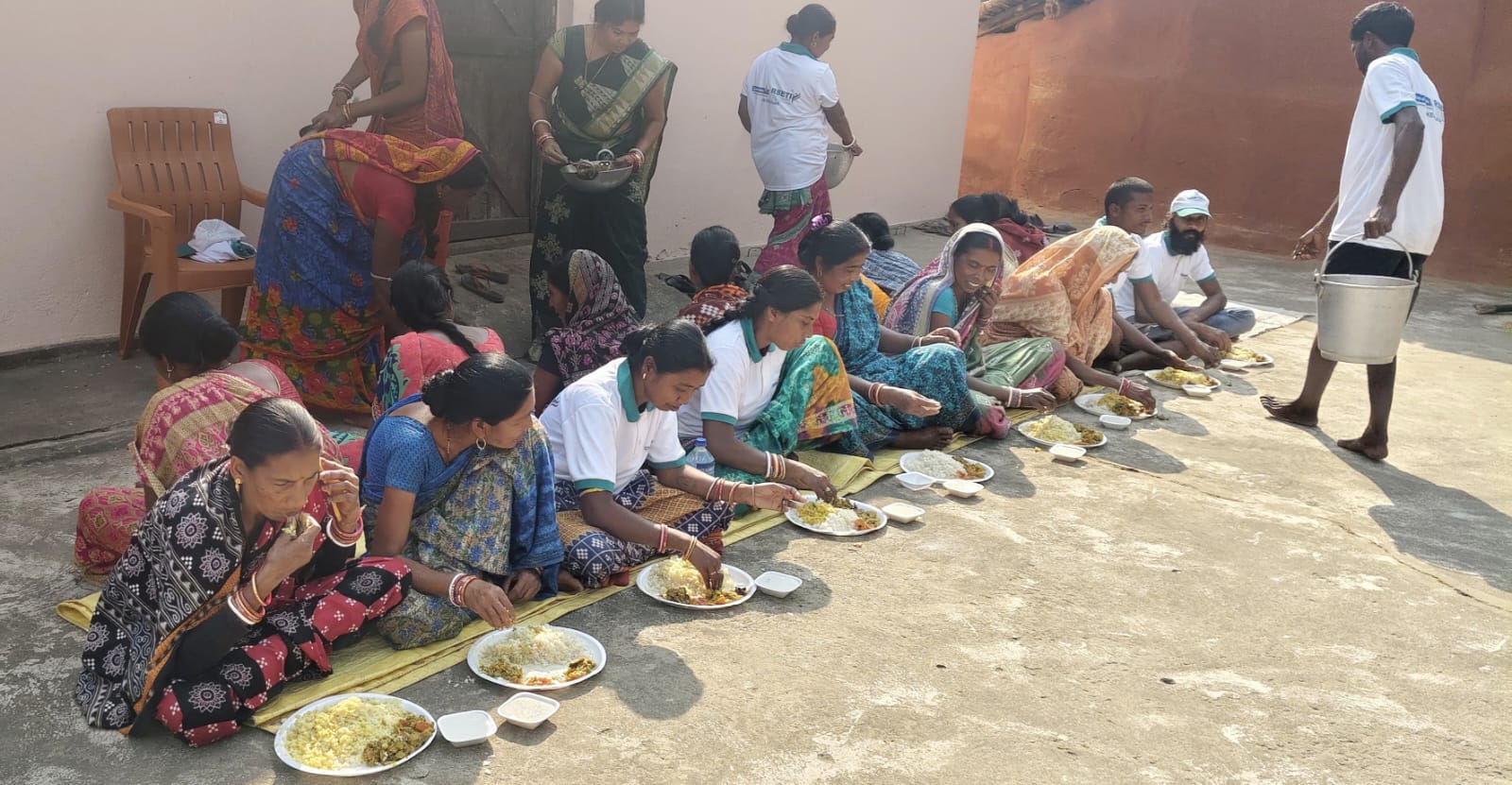
The residential format further created a structured learning environment, reducing social and household barriers, particularly for women participants.
From Skill Acquisition to Skilled Identity
A key feature of the programme was certification through RSETI, which played a critical role in transforming how participants saw themselves.
The shift was not only technical but deeply psychological:
From unskilled labourers → to certified skilled workers
This transition significantly improved:
- Confidence in taking up construction work independently
- Recognition within local labour markets
- Willingness to engage in wage and self-employment opportunities
Key Analytical Insights
1. Strong latent demand for construction skills
Consistent enrolment across batches reflects an unmet need for structured, job-linked skilling in rural areas.
2. Women redefining participation in skilled trades
With ~76% women participants, the programme signals a clear shift in social norms around gender and work.
3. Skills as a pathway to confidence and agency
Participants demonstrated visible shifts in self-belief, decision-making, and aspiration after training.
4. Emergence of a local skilled workforce
The initiative is gradually strengthening a community-based construction labour ecosystem, reducing dependency on external workers.
5. Residential training as an equaliser
The immersive model enabled participation of individuals who otherwise face barriers of mobility, time, and social constraints.
Beyond Training: Real-Life Transformation
The impact of the programme extends beyond skill acquisition into lived transformation.
Participants like Lipisa Behera represent this shift, moving from irregular informal labour to structured employment opportunities in the construction sector. More importantly, such journeys reflect a deeper change: from dependence to economic agency.
Families, too, have begun to show greater acceptance of women engaging in skilled work, indicating a gradual but meaningful shift in community perceptions.
Broader Social and Economic Impact
The initiative is already influencing the local ecosystem in multiple ways:
- Household economics: Reduced dependence on external skilled labour for housing construction
- Local employment: Increased availability of trained workers within villages
- Gender inclusion: Greater acceptance of women in non-traditional livelihoods
- Economic circulation: Retention of construction-related income within local communities
A Model for Inclusive Rural Skilling
- The program practice-based me demonstrates that when skill development is:
- Contextual to local economies
- Hands-on andLinked with certification and recognition
- Delivered through s
- trong community mobilisation
…it can create meaningful pathways to livelihood transformation.
The intervention follows a simple but powerful three-part model:
- Mobilisation: Community outreach and enrolment
- Training: Residential, han
ds-on skill development - Certification: Formal recognition through RSETI
Looking Ahead
Building on its outcomes, the initiative presents a strong foundation for scale through:
- Expansion to additional panchayats and districts
- Introduction of advanced construction skill modules
- Stronger linkages with housing schemes and contractors
- Long-term tracking of livelihood and income outcomes
Conclusion
The Masonry & Construction Skills Training Initiative demonstrates that skill development, when grounded in local realities and delivered through experiential learning, can catalyse deep economic and social transformation.
Among working-age rural populations (18-50 years), the programme has enabled a shift from informal, uncertain labour to structured, skilled employment pathways, strengthening both livelihoods and local economies.
In Keonjhar, this transformation is already visible: from unskilled work to skilled identity, from exclusion to participation, and from vulnerability to agency.
This initiative stands as a replicable model for inclusive, community-driven rural economic transformation through skills.