

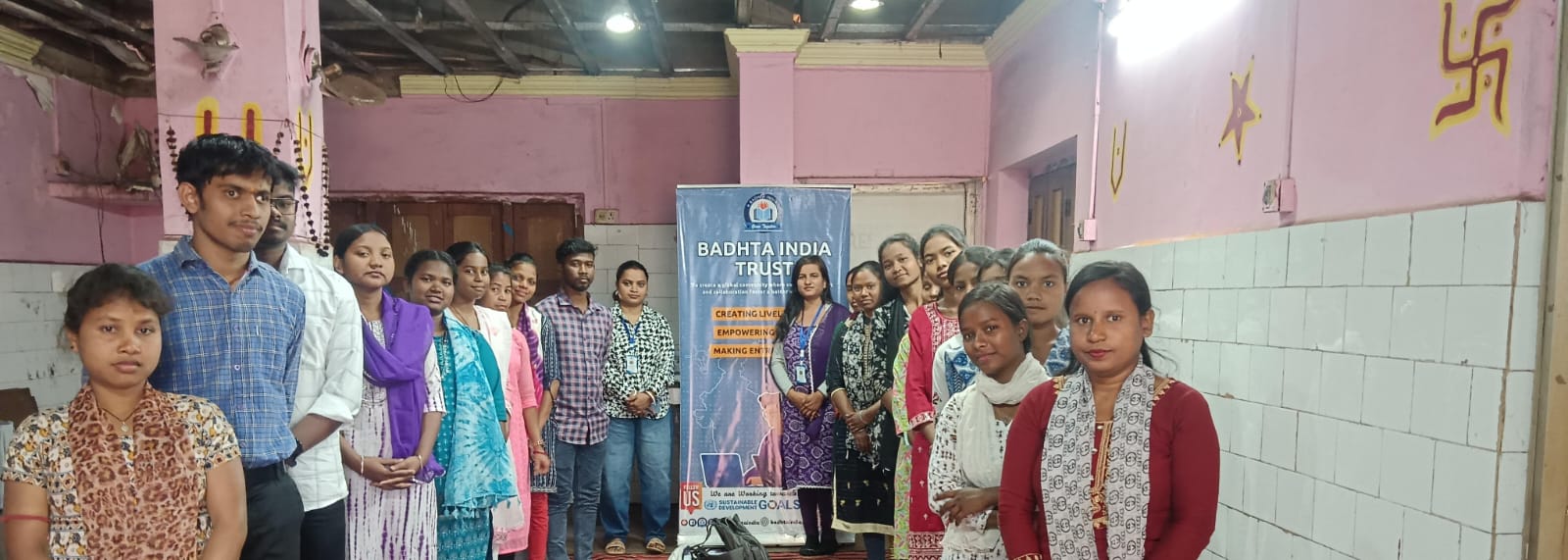
Digital Skilling for Youth in Barbil & Rourkela
“I didn’t think I could work in an office… now I do.”
In Barbil & Rourkela, Odisha, many young people grow up with a quiet limitation placed around their future, not always spoken, but deeply felt.
After finishing school, the path ahead often feels narrow and predictable. Some move into daily wage work, some take up small informal jobs in their locality, and many simply wait, hoping for an opportunity that may or may not arrive.
Over time, this waiting becomes normal. And in that normalcy, a deeper question begins to form: not “what should I do next,” but “is there even a place for me in a different kind of work life?”
It is in this space, between aspiration and uncertainty, that the Digital Skilling Programme in Barbil and Rourkela begins its work.
A Small Beginning with a Larger Purpose
The Digital Skilling Programme was introduced with a simple intention: to give young people a real, structured chance to step into a different future.
This initiative is being implemented across two centres, Barbil and Rourkela in Odisha, ensuring access for youth in both mining-impacted and urban-industrial regions.
It is an initiative supported by Barbil Municipality, Rourkela Municipal Corporation, and LightHouse Communities Foundation, working together to create stronger pathways from training to employment.
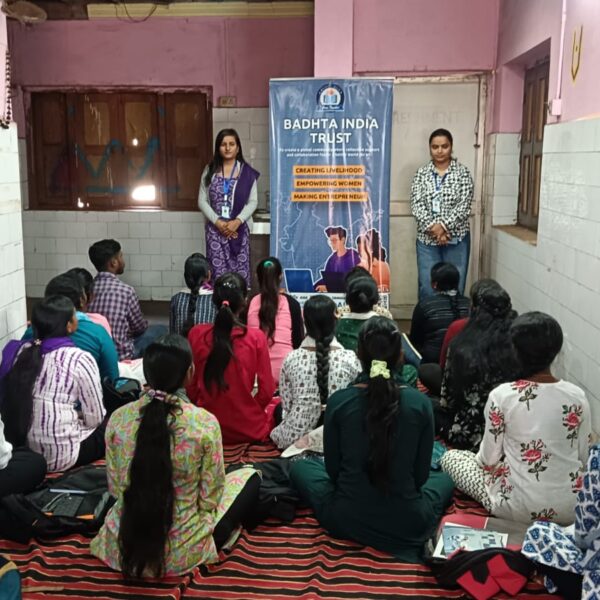
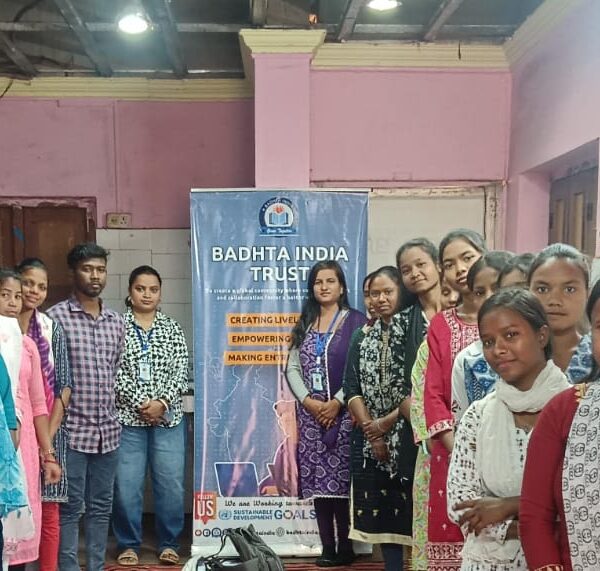
The programme is implemented by Badhta India Trust in partnership with LightHouse Communities Foundation. Beyond structures and partnerships, what defines it is its focus on one outcome: helping young people move from uncertainty into employment.
It begins not with ambition, but with access. Access to skills, exposure, and a learning environment that many participants are stepping into for the first time.
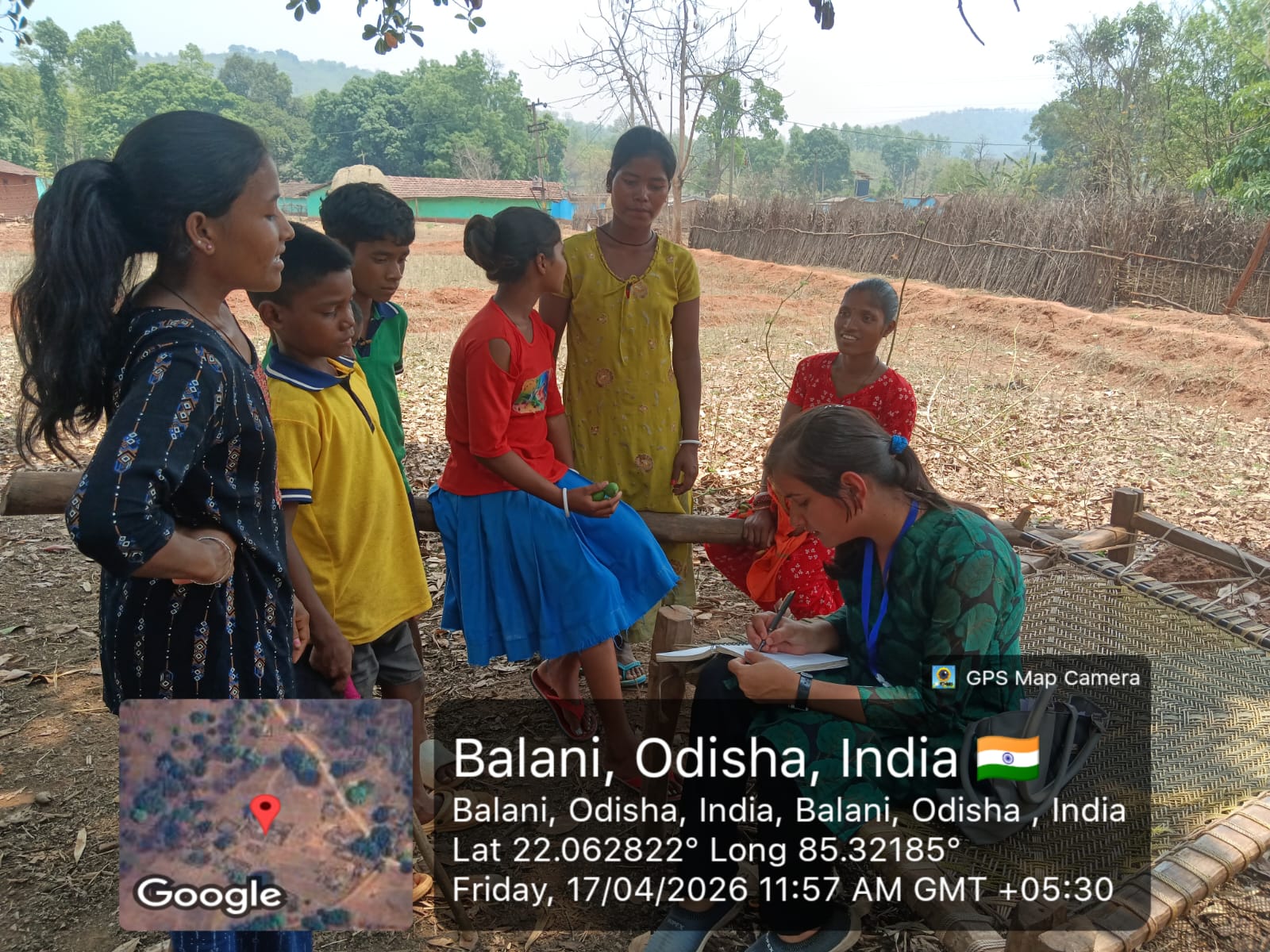
Learning That Goes Beyond Computers
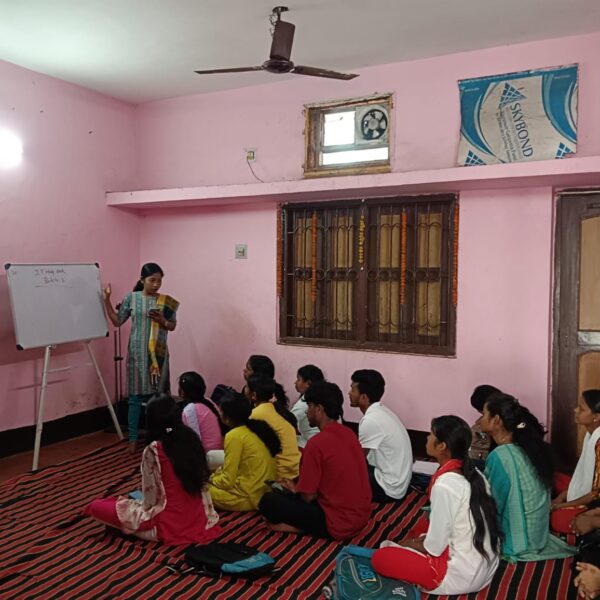
When young people first enter the programme, many assume it will be limited to computer training. Very quickly, they realise it is something much more layered.
They begin with digital basics, learning how to use computers, understand workplace tools, and become comfortable with technology that is now part of almost every job.
But alongside this, another kind of learning unfolds. They are introduced to how workplaces function, how communication happens in professional spaces, and how to present themselves in interviews and group settings.
Gradually, learning becomes not just about what to do, but how to be in a workplace.
The Quiet Shift: From Hesitation to Confidence
The most visible transformation does not appear in certificates or assessments. It appears in behaviour.
At the beginning, many participants hesitate to speak. They avoid answering questions. They are unsure of their place in structured learning spaces.
Over time, small but meaningful shifts begin to appear.
- A participant raises their hand without being prompted
- Someone answers a question with clarity instead of silence
- Group discussions begin to feel more balanced and open
These are not dramatic changes, but they mark something important: the beginning of self-belief.
Confidence does not arrive all at once. It builds slowly, through repeated moments of participation and encouragement.
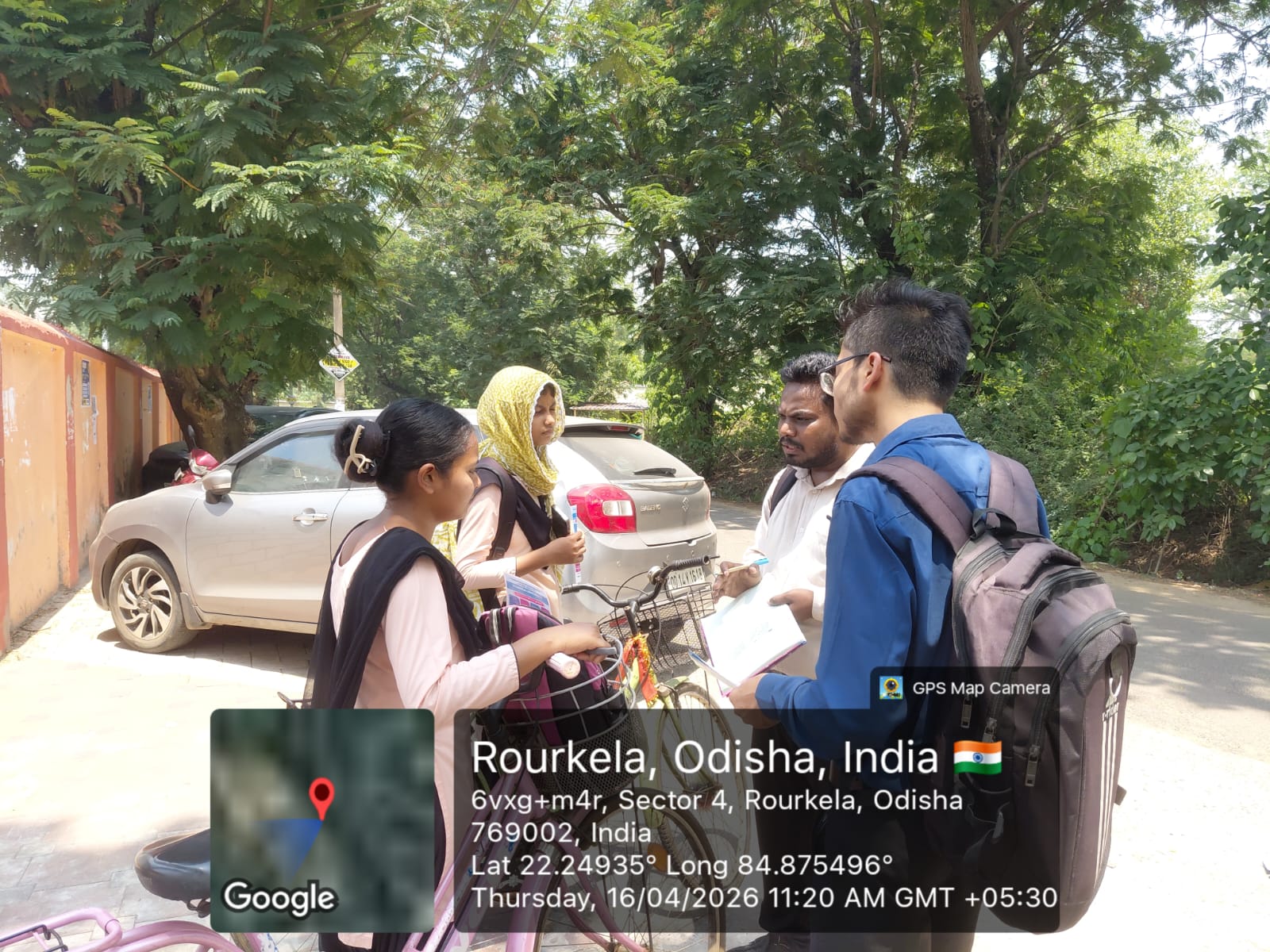
From Training Room to Workplace
What makes the programme meaningful is its direct connection to employment.
As participants complete the journey, many begin stepping into their first formal jobs. These are typically entry-level roles in customer support, service sectors, and field-based or digital operations.
For several young people, this transition represents:
- Their first formal job
- Their first steady monthly income
- Their first experience of workplace structure and responsibility
The shift from training to employment is where learning becomes a lived reality.
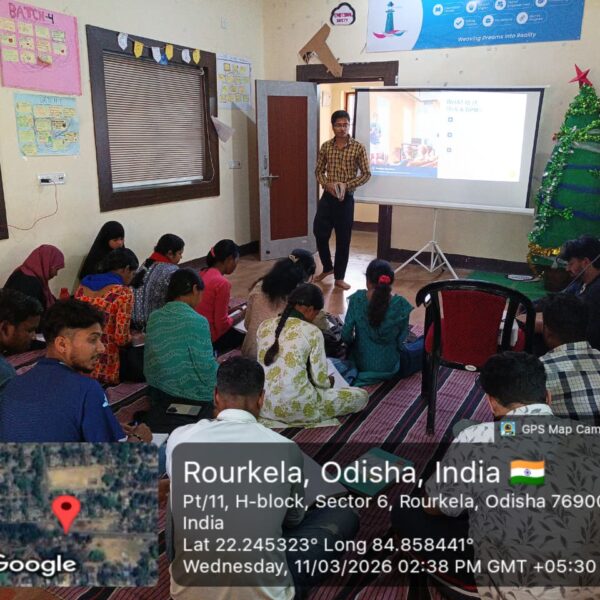
What is Emerging on the Ground
As the programme continues, clear patterns are visible:
- Most participants are completing the training journey successfully
- A significant number are transitioning into jobs shortly after completion
- Families are witnessing structured income generation for the first time
But beyond these outcomes, a bigger change is emerging.
Young people are beginning to imagine futures that once felt out of reach. The idea of formal work is no longer distant; it is becoming tangible.
The Ripple Effect Beyond One Person
The impact of the programme rarely stays limited to one individual.
When a young person enters formal employment, the change extends outward. Families begin to view education and skilling differently. Financial stability brings new confidence into households. Younger siblings start seeing education as a pathway, not a question mark.
Over time, these individual shifts begin to influence community-level thinking around learning, work, and opportunity.
Why This Approach Works
The effectiveness of the programme lies in its simplicity and grounding.
It is built on three core principles:
- Meeting young people where they are
- Focusing on practical, job-ready skills
- Linking training directly to employment opportunities
The collaboration between Badhta India Trust, LightHouse Communities Foundation, and local government bodies ensures that the programme remains connected to real community needs rather than abstract design.
Looking Ahead
While the programme is already having an impact, the need remains much greater.
There are still many young people in Barbil and nearby regions waiting for similar opportunities.
The next phase focuses on:
- Expanding access to more youth across nearby areas
- Strengthening job linkages with employers
- Building stronger pathways into entry-level digital and service-sector roles
The need is not only for training; it is for direction and possibility.
Sometimes, change does not begin with an immediately visible transformation.
It begins quietly, with a person learning to speak up in a classroom or sitting through an interview with a little more confidence than before.
And from there, slowly but steadily, a different future becomes possible.